

The Public Humanities Exchange program (HEX and HEX-U) at the UW-Madison Center for the Humanities funds innovative public humanities projects that forge partnerships between community organizations and UW-Madison students.
The following guest blog post, written by recent HEX Scholar and former Public Humanities Fellow Diego Alegría, highlights how he collaborated with local community radio station WORT 89.9 FM to create literature-focused episodes featuring young Spanish speakers. In 2023-24, Alegría was a Public Humanities Fellow at WORT, and the relationships he cultivated with the radio station’s team were pivotal to his success in creating the Tertulia Literaria episodes through his Public Humanities Exchange project during the 2024-25 academic year.
How a “Tertulia Literaria” Enables High School Students to Engage with Radio as a Multifaceted Space for Expression

What would a “tertulia literaria” look like in the 21st century? This question stuck with me when I worked at WORT 89.9 FM Community Radio as their 2023-2024 Mellon Public Humanities Fellow. For those who might not know, “tertulia,” a Spanish word, means an instance of regular conversation among a group about some topic (Real Academia Española Dictionary). In mass media, this term also denotes a broadcasting space where a moderator facilitates a conversation between distinct participants (Real Academia Española Dictionary).
With these meanings in mind and with the help of Chali Pitman, WORT’s former News and Public Affairs Director, I envisioned literature-focused WORT episodes featuring young Spanish speakers. This opportunity would allow a high school audience to engage with radio as a multifaceted space, and with fiction in a different format: students could participate in a social forum for discussion, access, and expression, as well as experience the intimacy of a literary dialogue with this person-to-person medium.

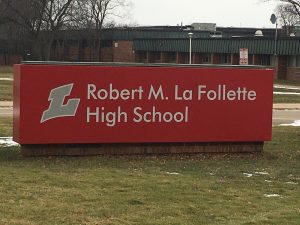
For Tertulia Literaria, I teamed up with Barbara Davis and Ricardo Calderón from East and LaFollette high schools, with whom I implemented Spanish-speaking poetry workshops in 2021 and 2022 through a previous HEX grant. Together, we devised a Spanish-speaking forum where dual-language immersion students could practice the art of literary criticism in audio format.
I co-facilitated literary criticism workshops with Barbara in fall 2024 and with Ricardo in spring 2025, in which we examined two short stories: “Un hijo” by Horacio Quiroga (Uruguay, 1878-1937) and “No oyes ladrar a los perros” by Juan Rulfo (Mexico, 1917-1986)—plus “Mi caballo mago” by Sabine Ulibarrí (United States, 1919-2003) for East. Both texts, promoted by the district curriculum, explore the topic of family and feature different narrative voices and perspectives, types of style, and figures of speech. By focusing on literary form, students were able to provide textual evidence to their interpretive claims in preparation for the recording session.
The workshops were a success, and students—although nervous at first—felt ready for staging a “tertulia literaria” in front of the microphones, engineered by past and present WORT’s Talk Producers, Jade Iseri-Ramos and Sara Gabler, respectively. At 7:00 PM on November 26 and May 26, South-Central Wisconsin listeners and beyond enjoyed two episodes of Tertulia Literaria through the program The Access Hour, a one-hour show managed by Volunteer and Outreach Coordinator Adrienne Ranney and sound engineer Emmett Reilly.
Listen to the episodes:
 Throughout the workshops and recording sessions, I witnessed how students incorporated the revised literary categories not only when they analyzed and interpreted the selected texts, but also when they discussed their favorite short stories. Although their responses differed in substantive ways, I felt amazed and energized by how they eloquently articulated a vision of “literature” grounded in opacity and incompleteness as constitutive features.
During the recording sessions, the conversations grew organically, since the students did not feel intimidated by the microphones; I still remember how they were impressed by the sound of their voices being recorded. When I was editing and organizing the audio files for the broadcasted episodes, I couldn’t stop thinking about the history of “tertulia literaria,” a common practice in the Ibero-American lettered city in the eighteenth and nineteenth centuries, and how we have revitalized it through community radio with Spanish learners and speakers living in Wisconsin.
With this idea in mind, Tertulia Literaria will guide my future endeavors in the realm of public humanities, where the literary is also a site for creative and critical dialogue, or, what Friedrich Schlegel famously called in the 1798 Athenäum, “a chain or garland of fragments.”
For more, you can listen to Melvin Hinton interview Alegría about his work. The conversation includes a bilingual reading of two poems written by Alegría. Hinton produces and hosts Radio Literature on WORT every week.