
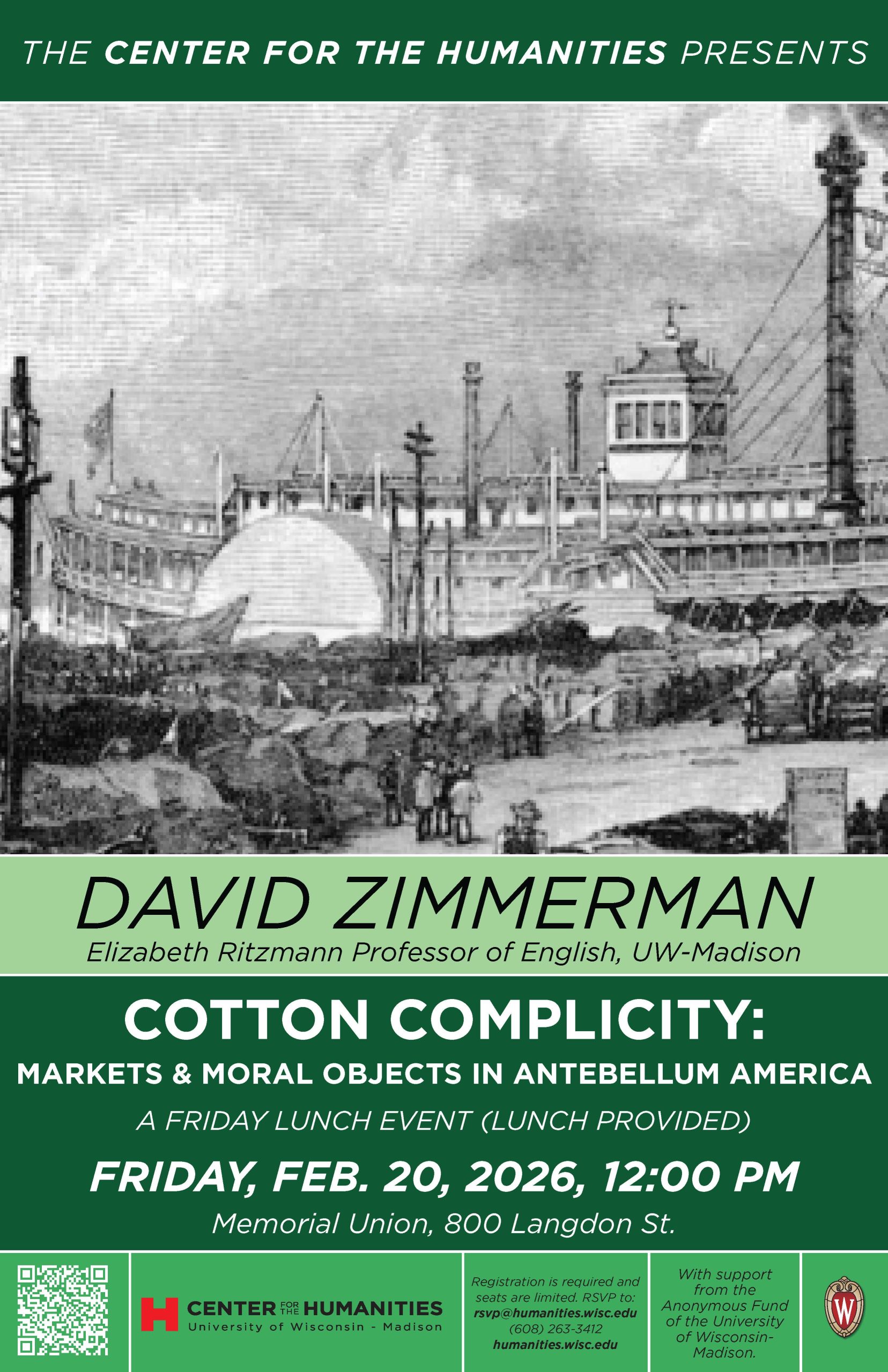
 A Friday Lunch Talk with David Zimmerman
Please note: We are at capacity for this event. To be added to the waitlist, please send an email to rsvp@humanities.wisc.edu with your name, title, or affiliation.
Between 1830 and 1860, “free-produce” advocates insisted that purchasers of goods made from cotton harvested by enslaved people shared fully in the enslaver’s criminality. The production paths, distribution chains, and financial exchanges propelling the cotton to the consumer formed a single moral circuit that conducted moral guilt without interruption or loss. Once a supporter of the Free Produce movement, the abolitionist William Lloyd Garrison turned against it, arguing that free markets and commercial transactions scrubbed slave cotton of moral contamination. Commodities were not moral objects, and the complicated swirl of global commerce cleared cotton consumers of any complicity.
A catered lunch will be provided at this Friday Lunch event. Seats are limited and available on a first-come basis.
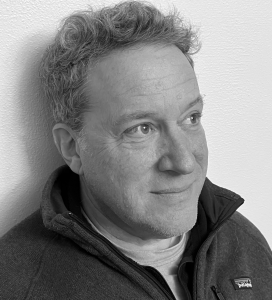 David Zimmerman is Elizabeth Ritzmann Professor of English at UW-Madison. His research focuses on nineteenth-century U.S. literature and its intersection with economics, religion, and moral philosophy. He the author of Panic! Markets, Crises, and Crowds in American Fiction (2006), and his essays have appeared in American Literature, American Literary History, the Cambridge History of the American Novel, and elsewhere. His current book project, “Complicity and the Antebellum Moral Imagination,” illuminates how new conceptions of moral complicity between 1830 and 1860 emboldened US activists, animated new literary forms, sparked political controversy, and seeded a plan to racially transfigure the Atlantic economy.