
 This special event is co-sponsored by the UW-Madison Center for the Humanities and the Graduate School.
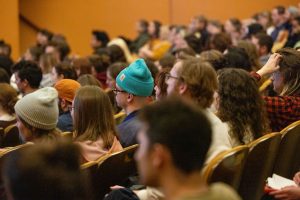
Thinking about life after your graduate degree—but not necessarily in academia? Join us for Beyond the Academy, a career panel designed specifically for MA and PhD students in the humanities and social sciences who are exploring professional pathways beyond the tenure track. You’ll hear from graduate-trained professionals who have built meaningful careers in public media, cultural institutions, nonprofit leadership, consulting, and more. Panelists will share how they identified public-facing career opportunities, translated their skills, and what their day-to-day work looks like now. This panel will be moderated by Tarah Connolly, PhD candidate, Curriculum and Instruction, UW-Madison.
After the panel, stick around for an informal networking reception where you can connect with the speakers and fellow graduate students, ask questions, and start building relationships that could support your own career development. Light refreshments provided.
Topics will include:
- How to identify and articulate the value of your MA and PhD skills outside academia
- Strategies for exploring career options and building a diverse professional network
- Tips on resumes, cover letters, and interviews beyond the CV
- Honest insights into the benefits and opportunities of public-facing careers
What you’ll gain:
- Insights into career options
- Strategies for identifying and communicating transferable skills
- Tips on job materials, networking, and navigating the transition
- Meaningful connections with professionals and peers
Who should attend: PhD students, postdocs, and early-career researchers in the humanities and social sciences interested in non-academic career paths and expanding their professional networks.
Panelists:
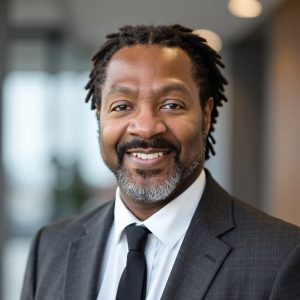 Jason Fields: Chief Strategy Officer, Center for Black Excellence (current PhD candidate, Leadership in Innovation and Continuous Improvement, Concordia University Wisconsin)
Fields, MSL, CEcD, CFEI, CCRS, is a distinguished leader in economic development, finance, and innovation. He is the Founder of Echelon Atlas, a global equity-driven financial technology platform that democratizes access to high-quality market data, investment tools, and economic insights. Echelon Atlas integrates advanced analytics, smart-beta research, and culturally informed financial education to empower individuals, institutions, and communities—particularly those historically excluded from wealth-building systems—to participate confidently in global markets.
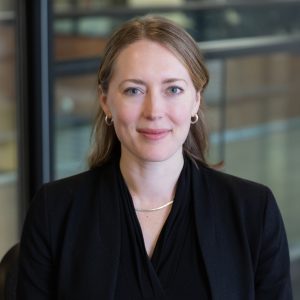 Maria Widmer (PhD, Educational Leadership and Policy Analysis) Instructional Design & Engagement Specialist, College of Letters & Science
Widmer works as an Instructional Designer for the College of Letters & Science at UW–Madison. In this role, she collaborates with instructors and campus partners to advance teaching excellence, learner engagement, and student well-being. Her research explores how college students engage with complex civic issues in and outside of the classroom. Widmer also serves as an instructor for The Discussion Project and a presenter, coach, and curriculum consultant for the Deliberation Dinners program.
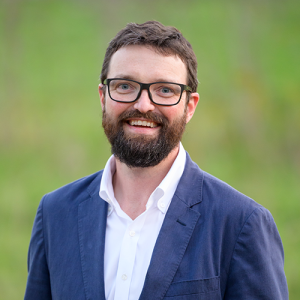 Charles Carlin (PhD, Geography), Director of Strategic Initiatives at Gathering Waters: Wisconsin’s Alliance for Land Trusts
Carlin works as Chief Strategy Officer at Gathering Waters: Wisconsin’s Alliance for Land Trusts. He leads the organization’s advocacy and public policy initiatives, especially the effort to fund Wisconsin’s Knowles-Nelson Stewardship Program. He also directs the organization’s research and GIS programs. Prior to Gathering Waters, Carlin was a geographer, a wilderness-based psychotherapist, and wilderness guide. His research explored what striking experiences in wild places can teach us about how we understand the interrelationship of nature and the human self. He led courses for NOLS, a wilderness education school based in Wyoming. Carlin was also an editor for Edge Effects, a digital magazine that brings cutting edge environmental scholarship to public audiences.
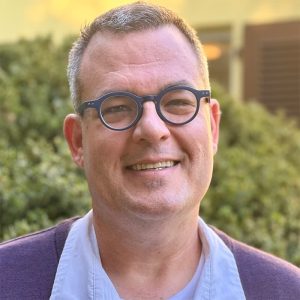 Todd Michelson-Ambelang (PhD in Scandinavian Philology) Librarian for Scandinavian Humanities and South Asian Studies; ADA Liaison for Public Services, General Library System
Michelson-Ambelang received their BA in German from Arizona State University (2001), an MA from UW-Madison in Scandinavian linguistics (2007), specializing in Norwegian language policy and historical linguistics, as well as a master’s in library and information studies from UW-Madison (2007), focusing on academic and special libraries. They have a PhD in Scandinavian philology (2015) and wrote their dissertation on disability and how it was perceived and received in the Icelandic Settlement Sagas. At the UW-Madison Libraries, Michelson-Ambelang is the subject specialist for South Asia and Scandinavian Humanities in the International and Area Studies Unit, and the ADA Accessibility Liaison for the Library System, where they work with various departments and stakeholders at the libraries and throughout the university to provide equitable access to library users with disabilities and impairments.
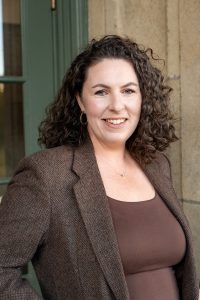 Moderator: Tarah Connolly (she/her/hers), PhD Candidate in Curriculum and Instruction at UW-Madison
Connolly’s work intersects with education research, organizational theory, and museum studies. In particular, she studies children’s museums and the many roles they play in their communities. Connolly is a lead facilitator for a statewide professional learning community of museum educators called the Wisconsin Children’s Museum Klatch and has partnered with numerous museums, libraries, and universities through IMLS- and NSF-supported projects. With more than a decade of experience as a museum educator-scholar, Connolly is committed to bridging research and practice to design and develop museums that are more equitable, transformative, and vibrant sources of connection in their local contexts.